Showing posts with label coins/currency. Show all posts

Tuesday, June 06, 2023

Are You *Kidding* Me?

On January 26th I ordered some Queen Elizabeth commemorative coins from the Royal Canadian Mint.

In February I received an estimated delivery date of March 21st.

In March I received an estimated delivery date of April 11th.

Later in March I received an estimated delivery date of April 27th.

In April I received an estimated delivery date of May 17th.

In May I received an estimated delivery date of June 8th.

Later in May I received an estimated delivery date of June 28th.

Today I was notified that the order has shipped and has an estimated delivery date of June 15th.  I won't even be in the United States on that date or for several days after.  But I will be here June 28th.

*sigh*

Update, 6/12/23:  The Canada Post web site says my package is out for delivery today.  I confirmed the US Postal Service and not a package delivery company will deliver it, so I went to my local post office (I currently have the post office hold my mail).  It wasn't there.  You know what was there, though?  The King Charles coronation commemorative coin I ordered from the UK's Royal Mint when TV coverage of the coronation was finished on May 6th.

Tuesday, March 14, 2023

Bessie Coleman

So many years ago now that it seems like a different lifetime, I volunteered as a docent at the Western Aerospace Museum at the Oakland Airport.  In 1995 we had an event for the release of a new stamp, and that's how I learned about Bessie Coleman.

Bessie is my kinda person--smart, hardworking, driven, moral, steadfast.  It's interesting enough that she went to France to become the first black American woman to earn a pilot's license, it's even better that in the early-to-mid-1920s she worked as both a lecturer and a barnstormer.  On at least one occasion, well, you've got to admire someone who's this sure of herself:

Coleman received immense support from her community. She was an inspiration to her fellow Black Americans, showing them that the sky wasn’t the limit, even in the face of a segregated world. While planning to perform in Texas, managers in charge of setting up the stadium had planned to create two separate entrances, one for Blacks and the other for whites. After hearing about this, Coleman refused to perform unless there was only one gate for everyone to use. After much back-and-forth, the managers agreed but said that the seating would still have to be segregated. Coleman agreed and gained fame for publicly standing up for her beliefs.  (link below)

She ended up dying in a flying accident: 

On April 30, 1926, Coleman and her mechanic took off for a practice flight in Jacksonville, Fla. Preparing for an upcoming performance, Coleman had not buckled her seat belt in order to be able to look over the side of the plane to scope out a good landing spot for a parachuting stunt. Cruising at 3,500 feet, the biplane accelerated and began to nosedive. It went into a tailspin and Coleman was thrown from the craft when it flipped. Her mechanic, William Wills, crashed the plane. Neither survived. Investigations revealed a loose wrench had gotten stuck in the control gears, preventing Wills from being able to right the plane. Rumors of sabotage spread, but the cause was ultimately ruled as accidental. At the same time, Congress was working with the Air Commerce Act of 1926 to help regulate pilots and their aircraft.

Her light shone bright, but only for a short time. Twenty-eight years after appearing on a US postage stamp, she will now appear on the quarter:

In 2022, the United States Mint launched its American Women Quarter program, releasing five different quarters with reverse designs depicting influential women from American history. The year 2023 continues the program, starting with the release of a quarter honoring Bessie Coleman.

The common obverse of the series depicts a portrait of George Washington, which was designed by Laura Gardin Fraser to mark Washington’s 200th birthday. “LIBERTY” is inscribed above Washington’s head and “IN GOD WE TRUST” sits behind his head. The date “2023” can also be seen under his chin.

The reverse shows Coleman suiting up for flight, looking towards the skies. A plane flies above the clouds in the background. At the bottom of the coin sits “BESSIE COLEMAN 6.15.1921,” referencing the date in which she received her international pilot’s license.

The article mentions that Dr. Mae Jamison, on her only shuttle flight, carried a picture of Bessie Coleman with her.  Class all the way.

Wednesday, February 22, 2023

In Memoriam

The post I wrote when Queen Elizabeth died was brief, almost pithy, but hidden in it was deep sorrow, as someone I respected--and whom my formerly-British grandmother adored--was gone.

The Royal Mint, and mints around the world, started putting out commemorative coins.  I picked out two to purchase, one from the Royal Mint and one from the Royal Canadian Mint.  The one from the Royal Mint arrived today:


This set with the coin and the stamps has a production quantity of 20,000 and, according to the mint's web site, is no longer available.

The Canadian set should arrive in late March and has a mintage of 7,500.

Wednesday, April 20, 2022

Getting Foreign Currency For A Trip

I’ve probably mentioned this once or twice (or a dozen times) before that I’m road-tripping to Cabo this summer.  I’m going to hitch up the trailer and drive!

Understand that I’m not a novice traveler.  My goal is to leave the country at least once a year, and while I don’t always meet that goal, I’ve left the country many times in my life.  I’m seasoned enough that I don’t fear going to new places, don’t fear not speaking the language (Google Translate is my friend), don’t fear trying new foods, don’t fear using different money--in fact, as a coin collector, using local money is one of the big joys of travel.  And I’m quite familiar with different ways of getting local currency.

Still, I like to stay current and I read plenty on the topic.  Many of the travel sites I’ve read recently said that one of the best and most inexpensive ways to get foreign currency is to get it from your bank before you travel.  Are they kidding???

It’s not that I haven’t used my bank for this before, but to say it’s a good/efficient/inexpensive way to get foreign currency, well, that’s not quite true.  Of course, it’s possible that my bank just tries to rip us customers off, but I’d find it hard to believe it’s the only one.  Since I’m heading to Mexico this summer, let’s look at the peso--today’s exchange rate is MXN$20 for USD$1.  Thus, 20,000 pesos should be 1,000 dollars, plus a fee.  What’s a reasonable fee, a few bucks?  Ten?  Twenty?  A couple percent?  Using the foreign exchange converter on my bank’s web site, 20,000 pesos would cost me $1061.70!!!  That’s a lousy exchange rate and a hefty fee, all rolled into one!

I went to another national bank's web site and tried to look up their rate, but you have to have an account and log in before they’ll tell you how much they’ll milk you for.  I cannot find the information quickly at my credit union’s site.  I can see the not-insignificant fees on the web site for another national bank, but not the crappy exchange rate they’d give me.

In other words, getting money from your bank is *not* necessarily the way to go!  The way to go, at least in Mexico, Europe, or the Caribbean (IOW, where I have traveled)  is to get money out of an ATM on your network and *not* to accept dynamic currency conversion rates.  The same people who write about getting money from your bank also mention the ATMs, so this isn’t an unknown method.  So why do those other authors say that getting money from your bank is inexpensive—do they write that crap because it makes them *sound* knowledgeable?  Have they ever compared their bank’s rates and fees to the official exchange rate?  Are they just copying the same bad information they read somewhere else without really knowing?

You can’t believe everything you read on the internet—except for this blog, of course.

Tuesday, March 01, 2022

Important Symbols on Mexican Money

For me, one of the most enjoyable parts of travel is using another country's currency.  You can often learn what's important to a country by what they put on their money.

Outside of the Europeans, who put bridges and windows that don't even exist on their money, most countries put depictions on their money of objects or ideas they consider important.  Look at US money, both coins and currency--the people and objects on those coins (except for the back of the $1 bill and the dime) are fairly important to our history and culture.  Sure, I'd prefer to go back to the days when a representation of Liberty, rather than dead presidents, is on the face of our coins, but what is on our money mostly represents what is good in America.

In a few recent posts I've shown pictures of some of the monuments and history of Mexico.  They must be pretty important, because they've shown up on Mexican money over the years.

The most important of all Mexican symbols is the eagle, on a cactus, eating a snake.  This symbol dates back to the Aztecs!  It's the central image on the Mexican flag.  Here it is on a 20 peso note from 1914, during the Mexican Revolution:


 Here's a statue of it in the National History Museum, a statue that predates the note above:

And here's a modern 10-peso coin.  This image is on all current Mexican coins:


As I said, the symbol of the eagle on a cactus eating a snake comes from Aztec mythology surrounding the founding of their capital city at Tenochtitlan, today's Mexico City.  Also from Aztec lore was Cuauhtemoc, the final leader of the Aztecs who took over after Montezuma was killed by the Spanish.  Here's a monument to him in the Zocalo, the main square in the city:

My guess is that no one has any idea what he looked, because every representation of him looks different, but he made an appearance in 1950 on the 50-centavo coin:


Even though no one knows who built the pyramids at Teotihuacan (they're pre-Aztec), they still represent a strong national tie to the country's heritage.  Here's a picture I took of the Pyramid of the Sun last Tuesday:

And here's that same pyramid on a 20-centavo coin from 1970:


Here is a picture I took last week of the Monument to Independence:


The angel on top is just beautiful.

That monument appeared on a 1985 200-peso coin:

The monument also appeared on the reverse of the 1970 1-peso bill:


Lastly, the so-called Aztec Calendar.  No other object encapsulates "Aztec" more than the huge round stone, which we today know was not a calendar but was more of a "fighting arena" akin to a boxing ring.  It's proper name is the Stone of the Sun.  Here are two pictures of it that I took in the National Anthropology Museum:


It appeared on the 1970 1-peso bill:

The center part of the stone appears on today's 10-peso coin:


The Mexican people enjoy strong ties to their past, both pre-Columbian and post-independence.  Their pride as a people is both abundant and clear, as demonstrated over the years even on their money.

Thursday, August 26, 2021

Venezuelan Currency

So many times on this blog I've talked about inflationary and hyperinflationary currency; how, if you have too many zeroes on your money, that's a sign that something is terribly wrong.

In 2018 Venezuela lopped 5 zeroes off its currency, yet today that currency is still valued at 4.17 million bolivars to the US dollar:

I received my latest eBay order today.  For being worth less than the paper they're printed on, those notes sure are pretty, aren't they?

Things are bad in Venezuela, and lopping off more zeroes isn't going to fix their problem:

Venezuela says it will make a million-to-1 change in its currency soon, eliminating six zeros from prices in the local currency as hyperinflation continues to plague the troubled South American nation.

Venezuela’s central bank on Thursday announced the change to the bolivar will go into effect Oct. 1.

The new 100 bolivar bill will be the highest denomination. It is equivalent to 100,000,000 of the current bolivar.

This is the third adjustment since socialist leaders began governing Venezuela. The bolivar lost three zeros in 2008 under now-deceased President Hugo Chávez, while his successor, Nicolás Maduro, eliminated five zeros in 2018.

Venezuela is in its sixth year of recession. Millions live in poverty, with high food prices that are commonly set in U.S. dollars and low wages.

The 1 million bolivar bill is currently the highest denomination, but it is scarce. More than seven of those bills are needed to buy a 1.3-gallon (5-liter) bottle of water,which cost 7.4 million bolivars or $1.84 dollars on Thursday.

This isn't the first time in recent history they've lopped off zeroes:

The government announced on 7 March 2007 that the bolívar would be revalued at a ratio of 1,000 to 1 on 1 January 2008 and renamed the bolívar fuerte in an effort to facilitate the ease of transaction and accounting...

The revaluation was rescheduled to 20 August 2018, and the rate changed to 100,000 to 1, with prices being required to be expressed at the new rate starting 1 August 2018.

And now they're excising 6 more zeroes.  3+5+6=14.  14 zeroes.  What could be the cause of this?  Hint:  it starts with "s" and rhymes with "motialism".

Tuesday, June 15, 2021

Magna Carta Day

Have you ever wondered why British currency is the "pound"?

For about 500 years, starting in AD 790 under Anglo-Saxon King Offa, the silver penny was the only coin minted in England.  These were small, thin, hammered coins, and 240 of them weighed one pound.  Thus, a "pound" is 240 pence, and later the pound was subdivided into 20 shillings of 12 pence each (still 240 pence).  In 1971, Britain switched to a decimal coinage of 100 pence to the pound.  If you've heard the expression "pound sterling", it comes from the 92.5% "sterling silver" of the pennies.

A couple weeks ago at a coin show I purchased a silver penny from King John.  It's about the size of a US dime and is in XF40 (extra fine, with a numerical grade of 40) condition.  Here's an example of such a penny in a somewhat higher condition:


King John wasn't the most popular of English kings.  He was the king during the Robin Hood time frame, and was compelled by his barons to agree to the Magna Carta.

Magna Carta is often taught as a precursor to the US Constitution, as it limited the rights of the English king.  However, as Wikipedia states:

First drafted by Archbishop of Canterbury Stephen Langton to make peace between the unpopular king and a group of rebel barons, it promised the protection of church rights, protection for the barons from illegal imprisonment, access to swift justice, and limitations on feudal payments to the Crown, to be implemented through a council of 25 barons. Neither side stood behind their commitments, and the charter was annulled by Pope Innocent III, leading to the First Barons' War

It was largely forgotten by Queen Elizabeth's time.

At the end of the 16th century, there was an upsurge in interest in Magna Carta. Lawyers and historians at the time believed that there was an ancient English constitution, going back to the days of the Anglo-Saxons, that protected individual English freedoms. They argued that the Norman invasion of 1066 had overthrown these rights, and that Magna Carta had been a popular attempt to restore them, making the charter an essential foundation for the contemporary powers of Parliament and legal principles such as habeas corpus. Although this historical account was badly flawed, jurists such as Sir Edward Coke used Magna Carta extensively in the early 17th century, arguing against the divine right of kings propounded by the Stuart monarchs. Both James I and his son Charles I attempted to suppress the discussion of Magna Carta, until the issue was curtailed by the English Civil War of the 1640s and the execution of Charles. The political myth of Magna Carta and its protection of ancient personal liberties persisted after the Glorious Revolution of 1688 until well into the 19th century. It influenced the early American colonists in the Thirteen Colonies and the formation of the United States Constitution, which became the supreme law of the land in the new republic of the United States.[c] Research by Victorian historians showed that the original 1215 charter had concerned the medieval relationship between the monarch and the barons, rather than the rights of ordinary people, but the charter remained a powerful, iconic document, even after almost all of its content was repealed from the statute books in the 19th and 20th centuries. 

So while Magna Carta would have limited the king's prerogatives, had it been complied with, it limited them only with respect to the barons; it had nothing to do with individual rights.  Those rights, as we understand them today, are actually the result of the English Enlightenment.  The myth of the Magna Carta as some sort of foundation of the rights of man is just that, a myth.

It is still, however, very interesting as history.  King John affixed his seal to Magna Carta in Runnymede Meadow, a few miles from Windsor Castle, on this date in AD 1215.

Sunday, December 06, 2020

Old German Currency

A native-French-speaking Swiss friend of mine, who has been living and working in England for the past few years, has landed a job in Munich, Germany.  We were chatting on WhatsApp today, and the subject of pre-euro money came up.

I visited continental Europe three times as a child, in the summers of 1974-76, and later as an adult.  On those early trips I crossed many borders and exchanged dollars into plenty of different currencies--French and Swiss francs, Dutch guilders, Austrian schillings, Italian lire, British pounds, German marks.  I completely understand the advantages of the euro; what too many people don't consider is what was lost when those independent countries adopted the euro.

This, however, isn't a post about economics or nostalgia, it's a post about currency itself.  While I don't have any of the paper Marks, shillings, etc., that I used as a child, I do have several examples of older German currency.  In other posts I've shown some of the German inflationary currency of 1922-23 that I have, in this one I thought I'd just share some of the other German notes I have.  I took these pictures of the notes next to an American $2 bill for size comparisons, and sent them to my friend just so he can get a flavor of German culture in the past:

click to enlarge


Don't you love the battleships on the reverse of the 100 Mark note?  And how about the size of those notes?

I have other inflationary notes, but these show the start.


This 1,000 Mark note was counter-stamped one billion Marks.


Note the different eagle-with-swastika logos on these two Nazi-era notes.  And how about that blond-haired, blue-eyed Aryan boy on the 5 Reichsmark note?  Contrast that with Albrecht Dürer on the 20 Reichsmark note.


This 5 Mark note is from East Germany.

Monday, August 31, 2020

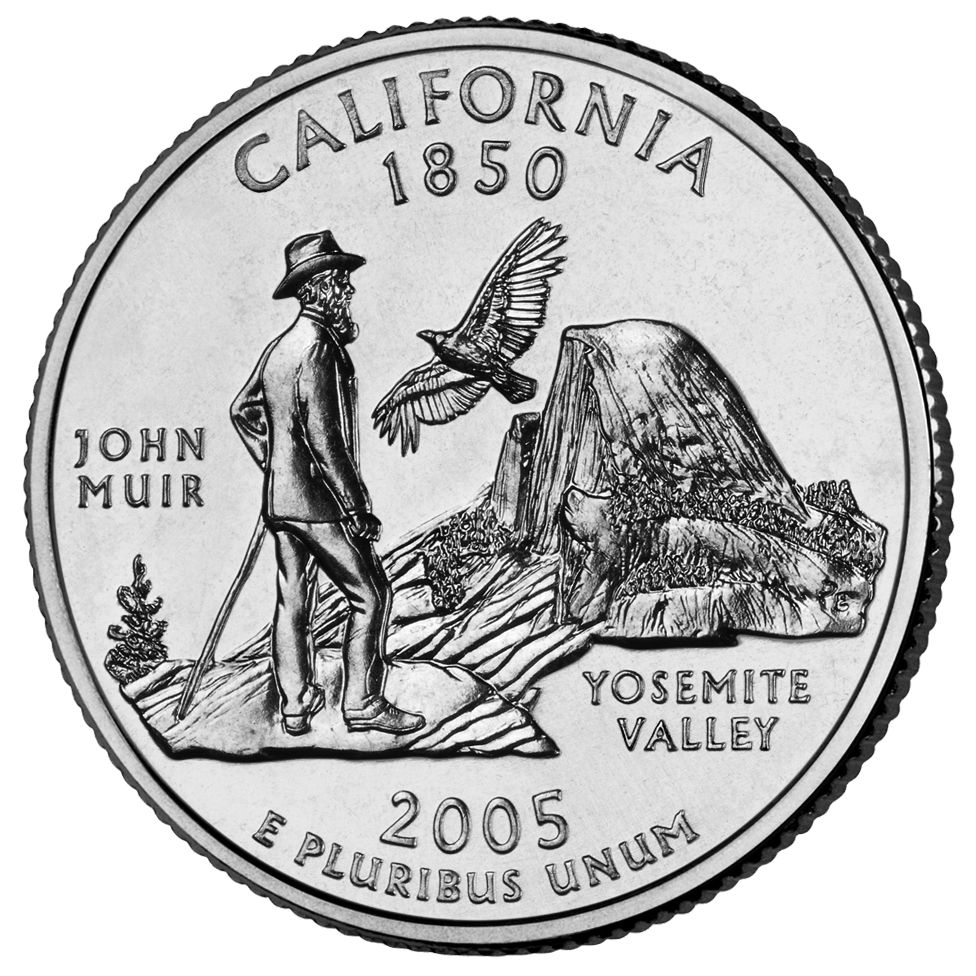
John Muir

If you can't honor anyone who ever said anything against today's "protected groups", well, I guess we'll soon have no one to honor.  Perhaps that's the plan.

Michael Brune, the Sierra Club’s executive director, tells members that “it’s time to take down some of our own monuments.” Brune says members must now “reexamine our past and our substantial role in perpetuating white supremacy.”

It turns out that, as a young immigrant from Scotland, John Muir made “derogatory comments about Black people and Indigenous peoples that drew on deeply harmful racist stereotypes, though his views evolved later in his life,” Brune wrote in a statement on the Sierra Club’s website. “As the most iconic figure in Sierra Club history, Muir’s words and actions carry an especially heavy weight. They continue to hurt and alienate Indigenous people and people of color who come into contact with the Sierra Club.”

Do people's accomplishments mean nothing anymore?  Are black Americans truly harmed by John Muir's existence?  Does California have to denounce its own State Quarter?

This is foolishness not worthy of serious adults, which tells you all you need to know.

Monday, November 04, 2019

$2 Bills

A lady at work was going through her mother's stuff and came across 45 $2 bills from the 50s and 60s.  Honestly, they aren't worth much more than face value, and she didn't know what to do with them, so I bought them from her for face value today.  I'm telling others at school they make great stocking stuffers for their kids, and cheap, too!

These notes have a red seal as opposed to today's green seal.

Saturday, June 08, 2019

Money Money Money

I'm going to be taking off for a couple weeks after school is out, and when I travel I like to have some cash on me.  You never know when it will come in handy.

So I went to the bank today, and en route I remembered that in less than a month I'll be in Canada.  Anyone who's traveled much knows that the way to get cash in a foreign country is to use the ATMs, but I figured if I'm going to the bank anyway....

I had a few dozen Canadian dollars stashed away from my last trip up north, and now I have an additional week's worth on hand.  I can go to an ATM if I need more.

(Why not use my credit card?  Well, I can, but to me, part of the fun of travel is using the local currency.)

Tuesday, May 28, 2019

A Good Day To Buy Coins

I received my Numismatic News today, and a couple stories pointed me to some coins I just had to buy.

From the UK's Royal Mint:  a ₤2 D-Day commemorative and a ₤5 200th anniversary commemorative of Queen Victoria's birth

From the US Mint:  a half-dollar and a silver dollar commemorative of Apollo 11

You have those days, right?  Where you just have to order a couple coins?

Tuesday, January 08, 2019

That's A Lot Of Inflation

Remember the first Presidential $1 coins that had edge lettering?  Remember the brouhaha after a few were found without the edge lettering?  Mistakes sometimes happen in our US mint facilities, and sometimes those errors are released to the public.  A big error happened during WW2:
A penny that a Massachusetts teenager found in his change from lunch money could be worth as much as $1.65 million (£1.3 million) when it is auctioned off.

The 1943 Lincoln penny is made up of copper and has been described as the "most famous" coin made in error, according to Heritage Auctions, which is auctioning off the coin. Only 20 were ever made and for years the U.S. government denied its existence, but one coin was found by Don Lutes Jr. in his school cafeteria in March 1947...

In the 1940s, copper was considered a strategic metal, largely because of World War II, as it was used to make shell casings, telephone wire and other wartime necessities. To preserve the metal, 1943 Lincoln pennies were made of zinc-coated steel, but a tiny fraction of the pennies put into circulation wound up using copper.
The 1943 pennies are gray-colored "steel cents".  This kid's cent is made of copper.

Sunday, August 12, 2018

What Could Possibly Be The Cause of This?

Have you noticed that stable democratic countries don't experience hyperinflation?
RUBEN GALINDO: Why should you be tied to any specific type of money if it's not working for you?

GONZALEZ: His website, AirTM, allows everyone in the world to trade currencies. He hires 25 people in Venezuela, including Mila. And then they all get an email.

GALINDO: This is the Ministry of Finance. What you're doing, we don't like it. And you guys should stop because if not, we're going to put you in jail for 10 to 15 years.

GONZALEZ: Venezuela's president, Nicolas Maduro, doesn't want too many people to have U.S. dollars. And economists say this is actually a reasonable fear. If too many people have dollars, they might refuse to use the local money. This happened in Zimbabwe in 2008, and the government was forced to make the U.S. dollar its official currency.

And something really important happens when you adopt another country's currency. You lose your ability to print money when you need to pay your bills. Venezuela's government says they've arrested more than 200 people for exchanging money on the black market, and they are looking for Mila. This is why we're not using her last name.

MILA: The charge is fake exchange rate of the dollar - terrorism financiation (ph).
What's the cause of this?  Well, it starts with "s", and rhymes with "ocialism".  That, and a strongman government that thinks it's stronger than the laws of economics.

Update, 8/13/18Here's more from the Bolivarian socialist paradise:
Fuel in the oil-rich nation may be practically free, but motorists are finding it increasingly hard to keep their vehicles on the road. Petrol shortages are ever more common: motorists commonly wait for six hours or more in fuel queues...

 Now, the government is attempting to alleviate the fuel crisis with a nationwide census of vehicles, and though officials have not been forthcoming with specific details, the president, Nicolás Maduro, has said it will lead to “rational” fuel use.
Even more government control.  I'm sure that will work.  But let's return to our story:
Meanwhile, the bolivar, Venezuela’s currency, is practically worthless, with the International Monetary Fund (IMF) predicting that inflation will reach one million per cent by the end of the year....

Saturday, March 24, 2018

Socialism and Zeroes

As I said in these two posts about hyperinflation, you have real economic problems if you have a lot of zeroes on your currency.  Venezuela is in deep economic peril, and their solution is not very creative:
Venezuela's hyperinflation is driving the government loony-tunes. That's the only explanation I can think of for why the government of Nicolás Maduro has decided to lop off three zeroes from its currency, the bolivar, to fight, he says, "economic persecution" from Columbia.
Standing in line to buy nonexistent products with worthless currency.  Ain't socialism grand?

Monday, July 31, 2017

This Is Where Socialism Leads

Ignore Bitcoin, buy World of Warcraft tokens--if you live in Venezuela:
Digital gold from Blizzard’s massive multiplayer online game “World of Warcraft” is worth more than actual Venezuelan currency, the bolivar, according to new data.

Venezuelan resident and Twitter user @KalebPrime first made the discovery July 14 and tweeted at the time that on the Venezuela’s black market — now the most-used method of currency exchange within Venezuela according to NPR — you can get $1 for 8493.97 bolivars. Meanwhile, a “WoW” token, which can be bought for $20 from the in-game auction house, is worth 8385 gold per dollar.

According to sites that track the value of both currencies, KalebPrime’s math is outdated, and WoW gold is now worth even more than the bolivar.
I've written before about hyperinflation (here, for example).  This is what hyperinflation looks like at the beginning.

Venezuela is starving. And it was only a few years ago when Chavez and his socialism were being praised by American leftists (here's another).

Update, 8/2/17:  A couple of days behind me is the Los Angeles Times with this op-ed:
Remember all those left-wing pundits who drooled over Venezuela?

Friday, June 02, 2017

Cool Coin

After last week's Italian gettone, here's one from Israel.  Note that it has both Hebrew and Arabic writing on it:


Friday, May 26, 2017

Cool Coin

This is a pay phone token that I picked up in Italy during the summer of 1976. It's a gettone, pronounced "jeh-tony".  If I remember correctly, there was quite the shortage of coinage in Italy at the time, and these circulated as coins--perhaps worth 50 lire, at a time when there was somewhere between 700 and 900 lire to the US dollar.

click images to enlarge


Friday, May 19, 2017

Cool Coin

As I type this (in December!), this bimetallic beauty from Mexico, denominated 10 pesos, is worth about 50 US cents.
click images to enlarge


Friday, May 12, 2017